Brainwire Business
Analytics
Analytics
Practical thinking on scaling brands across India's quick-commerce platforms.
Flipkart Minutes is taking a different approach to India's Quick Commerce expansion. Rather than focusing exclusively on major metropolitan markets, the platform is increasingly looking towards Tier 2 and Tier 3 cities, where its existing e-commerce ecosystem offers a significant advantage.
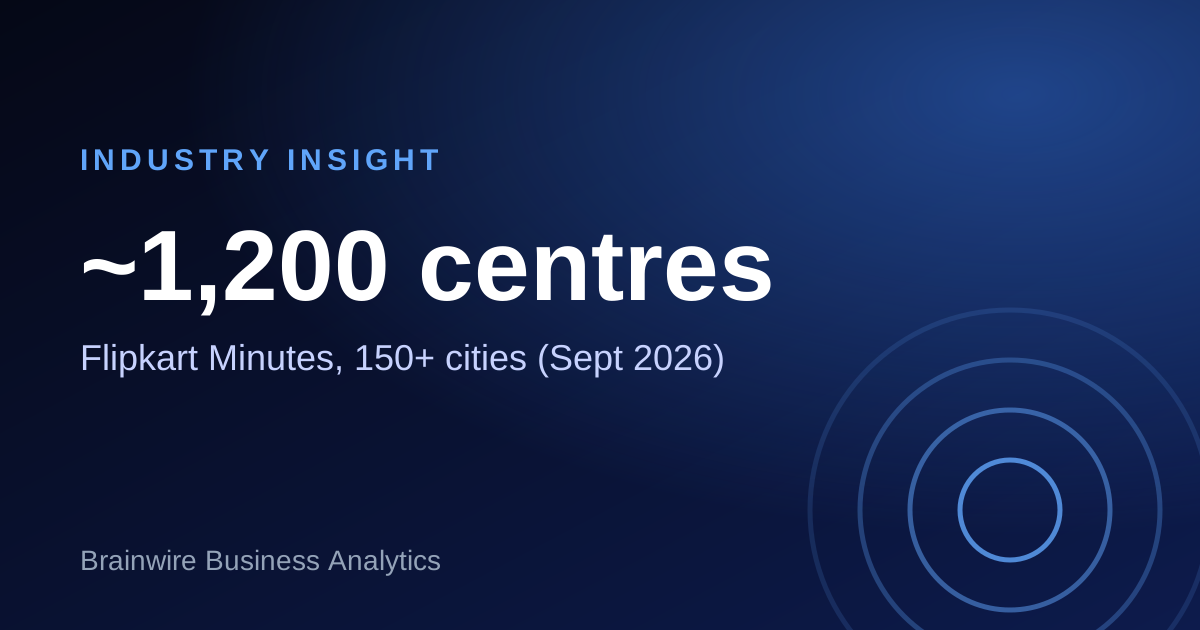
Launched in August 2024, Flipkart Minutes has grown rapidly. By September 2026, it had expanded to nearly 1,200 micro-fulfilment centres across 150+ cities, recording 4X year-on-year business growth. Its customer base in Tier 2+ markets grew nearly 25X over the same period.
An interesting question around Flipkart's Kerala expansion is its choice of markets. Why explore locations like Kannur instead of concentrating entirely on established commercial hubs such as Kochi?
The answer may lie in the opportunity beyond metropolitan markets. Kerala has a strong online shopping ecosystem, geographically distributed urban centres and consumers with established digital purchasing habits.
Flipkart's expansion strategy has increasingly recognised the potential of smaller cities. Its existing logistics infrastructure and understanding of regional shopping behaviour can help it evaluate markets beyond traditional metropolitan locations.
However, Flipkart has not publicly disclosed why Kannur was selected ahead of Kochi, or confirmed that it was the first Kerala launch location. The specific location-selection rationale should therefore be treated as an industry question rather than an established company decision.
One of Flipkart's biggest advantages over newer Quick Commerce players is its existing e-commerce ecosystem. With over 500 million registered users, 150 million products across 80+ categories and 1.4 million sellers, Flipkart has accumulated extensive shopping and transaction data across India.
This data can provide valuable insights into regional consumer behaviour, including:
This creates an important advantage when expanding Quick Commerce into new markets. Instead of starting from scratch, Flipkart can potentially use aggregated insights from its existing e-commerce ecosystem to understand regional demand and make better expansion decisions.
For brands, this opens up an interesting opportunity.
Quick Commerce is no longer just about entering Kochi, Bengaluru or other major cities. Emerging markets across Kerala could offer meaningful growth opportunities as platforms expand their fulfilment networks.
Brands that understand regional demand, identify the right SKUs and establish their presence early can position themselves to benefit from this expansion.
The real opportunity lies in combining platform reach with data-driven assortment, pricing and inventory strategies.
Talk to us about getting your brand onboarded and fulfilled right.
Get in touchChat on WhatsApp